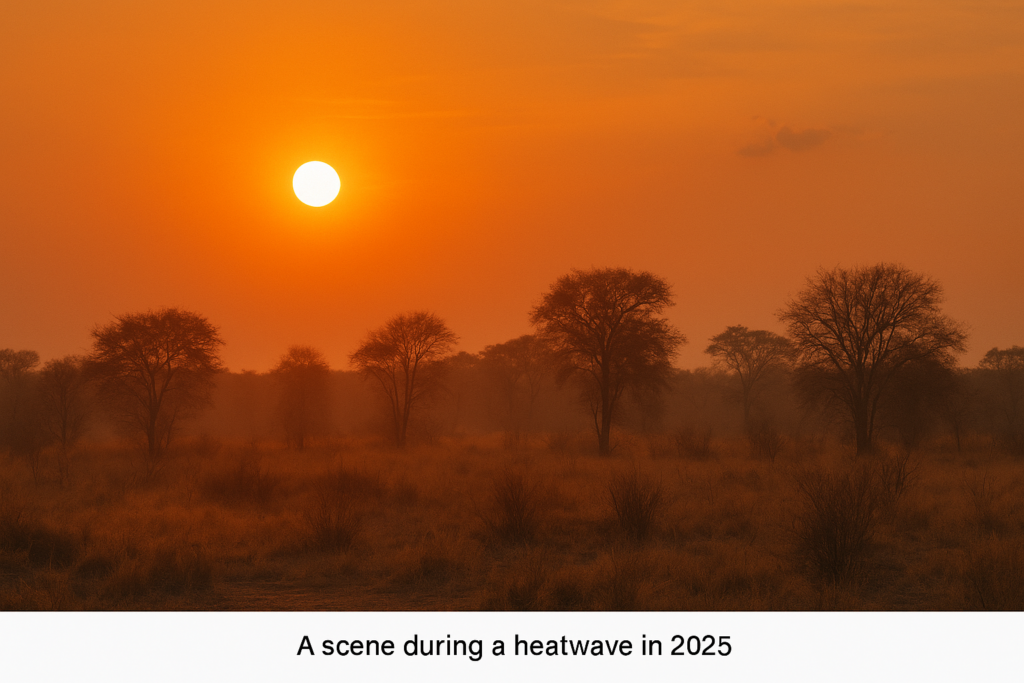

In 2025, the impacts of climate change have intensified across the globe, with record-breaking heatwaves, wildfires, and ecosystem disruptions. From South Asia to North America, extreme weather events are becoming more frequent and severe. These changes are not only affecting the environment but also threatening human health, food security, and livelihoods.
1. Heat Extremes and Human Toll
The period from May 2024 to May 2025 saw a dramatic increase in global extreme heat. During that time, roughly 4 billion people experienced at least 30 days of temperatures hotter than the top 10% historically, and every one of the 67 major heat events was made more likely by human-induced warming (climatecentral.org). In India and Pakistan, an early and prolonged heatwave: from April to mid‑July—saw temperatures soar to 48 °C (118 °F) in Rajasthan, resulting in hundreds of heat-related fatalities, severe stress on agriculture, widespread power outages, and intensified storms due to heat‑humidity interactions (Wikipedia). In the United States, coastal states like Georgia are now experiencing two to three more extreme‑heat streaks per year, straining public health resources (Axios).
2. Fires, Drought, Glaciers, and Ecosystems
California suffered early 2025 wildfires, especially around Los Angeles, driven by a “climate whiplash” pattern: successive heavy rains followed by prolonged drought dried out fuel, creating explosive wildfire conditions under smoking‑hot winds. These fires have become more frequent, overlap increasingly with wind seasons, and are now occurring nearly year‑round (Wikipedia). At the same time, global coral reefs are enduring the most severe bleaching event ever recorded—impacting about 84% of reefs worldwide between 2023 and 2025, driven by unusually warm oceans (Wikipedia). In high mountains, Himalayan glaciers continue melting: in India river basins and glaciated regions, up to 67% loss of glacier area has contributed to growing water insecurity, threatening livelihoods and food production for billions (Wikipedia).
Summary
2025 has reinforced the growing reality of climate‑driven impacts: record heatwaves, amplified fire seasons, ecosystem collapse, and deepening socio‑economic inequalities. Vulnerable populations—whether the poor, coastal communities, or Indigenous herders—are bearing the brunt. The year also highlights urgent need for policy responses, early warning systems, and climate‑resilient adaptation.
PS: Here is an article I wrote on: 101 Climate Change Impacts You Should Know.